Posts

Showing posts with the label Roman

On My Mind: 3-6-21

Image
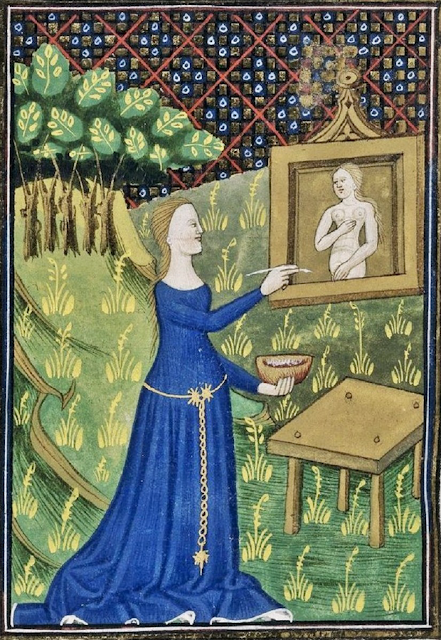
Detail from 15th century miniature featuring Timarete Names from The Wolf Den - I recently had the pleasure of reading The Wolf Den by Elodie Harper, which releases on the 29th of this month (look for a review from me around that time on the other blog ). It is set in Ancient Rome, Pompeii to be exact, and follows the life of a prostitute. The main character is given the name Amara (her pimp tells her it is half way between love and bitter -- amare and amarum ), but was born Timarete, in Aphidnai. Timarete means comes from the elements τιμη, meaning "honor, esteem", and ἀρετὴ, which means "virtue or excellence". It is also the name of a famous artist from Ancient Greece, who is sometimes credited as Thamyris. Other characters are Dido, Cressa, Victoria, Beronice, Fabia, Drusilla, Drauca, Attice, Paris, Gallus, Felix, Rufus, and Menander, whose real name is Kallias. Mikey, for a girl - I've always been a huge fan of a boy's nickname for a girl, like Freddie f...

Free to a Good Home: Boys, pt. 2

Image
Ronan - Origin: Irish Gender: Male Meaning: "Little seal" Pronunciation: ROW-nahn, ROW-nen Other Forms:  Rónán, Ronen Combos: Nathaniel Ronan, Ronan Tiberius, Wilfred Ronan, Ronan Percival I've been a lover of Irish names my whole life -- I was even gifted a book all about them when I was younger, and marked so many that I wanted to remember (both for future children and pets). So it's no surprise that I am constantly trying to foist Irish names on everybody! Ronan is a favorite of mine and I love that it sounds both soft and strong, with the lovely unisex nickname of Ro. And I think the meaning is adorable: "little seal". It comes from the Old Irish  rón (meaning seal) combined with a diminutive suffix. Recently, Ronan has seen a bit of an uptick in the US; in 2020 it ranked #269. It also has a bonus bit of charm for Catholics -- There are several early Saints named Rónán, one of the most famous being one who built the hermitage at Locronan in the 6th centu...

Honor and Her Sisters

Image
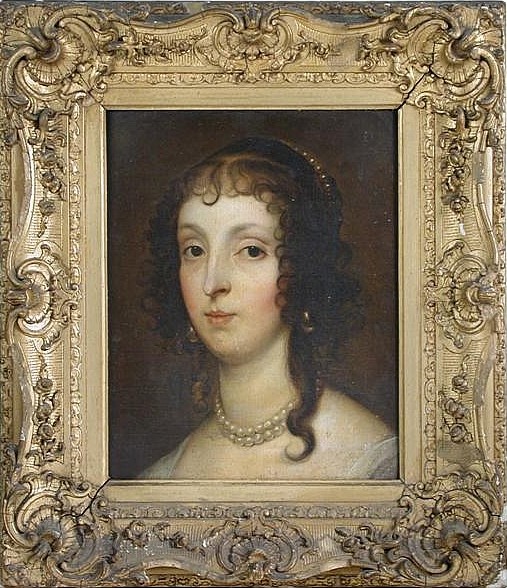
Honora Burke, circa 1690 by Theodore Russell I've recently become enamored with a set of names I like to call "Honor and Her Sisters", i.e. Honor and all the many forms of it -- from the Latinate lovely, Honoria, to the Breton Enora and the streamlined Nora. Instead of making separate posts for them, since they are so closely related, I thought I would put them all together like this. Please, let me know your favorite, and do you have any "Sister" or "Brother" names you like? Honor and Honour - A favorite among the Puritans of the 17th century, Honour comes from the Anglo-French onur  or honur, derived from the Latin honos, honor or honoris . The first known example of its use is in the 13th century. It means, of course, "to regard or treat with admiration and respect". This virtue name is a popular one among celebrities: both Jessica Alba and Tilda Swinton have daughters named Honor. There is also actress Honor Blackman, best known for playi...

On My Mind: 8-1-21

Image
Sunisa "Suni" Lee Sunisa - I've always loved watching the Olympics growing up and one of the main reasons was because I loved seeing all the different names! One I can really see catching on is that of Sunisa "Suni" Lee. Sunisa is Hmong, a small ethnic group, and her parents are both originally from Laos. Sunisa is a Thai name (there is a large group of native Lao speakers in northeast Thailand!) that means "good night". Horatia - Book lover that I am, I had to see which made it to the longlist for the Booker Prize. One of the judges is Horatia Harrod, an editor for the Financial Times' Life and Art section. Horatia is, of course, the feminization of Horatio, or Horatius, and possibly means "hour". Another Horatia is TV chef Nigella Lawson's sister (her other siblings include Dominic, Thomasina and Tom). Ayv and Romy - As a lover of all things baby and motherhood and, especially, names, I sometimes peruse the The Glow , which celebrat...

Portia

Image
Kate Dolan as Portia by John Everett Millais Origin: Ancient Roman Gender: Female Meaning: "Pig" or "Port, harbor" Pronunciation: POR-sha Other Forms: Porcia Portia is a favorite of mine, with a rich history and plenty of strong namesakes. The only thing holding it back is the meaning - "pig". Portia is thought to come from the Ancient Roman family name Porcius, which comes from the Latin porcus , "pig". The original feminine form was Porcia, giving Portia a bit of ambiguity, with some thinking it's more likely to be a form of Portius which means "port" or "harbor". It last placed in the US top 1000 in 1991 at #961, making it a perfect pick for someone looking for something unique. In Shakespeare's "The Merchant of Venice", Portia is the beautiful and witty Belmont heiress with a love of proverbs and wordplay. She later saves the life of her choice of suitor, Bassiano's, friend Antonio in court ...

Free to a Good Home: Boys, pt. 1

Image
"Ferdinand lured by Ariel" by John Everett Millais Ferdinand -  Origin: Germanic Gender: Male Meaning: "Brave voyager" Pronunciation: FUR-di-nand Other forms: Fernand, Ferran, Ferdinando, Ferdynand, Hernando,  Nándor/ Ferdinanda, Fernande Combos: Percy Ferdinand, Jasper Ferdinand, Ferdinand Xavier, Ferdinand Poe I think this name is regal and handsome, and has a wonderful meaning along with a great history, having been used by both Shakespeare and royalty alike. Ferdinand came from Ferdinando , an old Spanish form of a Germanic name made up of the elements fardi , "journey", and nand , which meant "brave" or "daring". Put together more poetically it's "brave voyager". Ferdinand hasn't ranked in the US since 1971, when it was way at the bottom at #984.  This name first truly struck me when I saw actor Sir Ben Kingsley used it for one of his sons (the other two are named Thomas Alexis and Edmund), who is al...

Names à la mode: Interesting Picks from France's Most Popular Names, 2015 (Boys)

Image
art by frédéric  bazille 2. Jules - The French are so stylish (especially when it comes to names!) and I was so happy to see something like Jules at number two. Jules is the French form of Julius, which is thought to mean "downy-bearded", and was a Roman family name. It is pronounced "ZHUYL" 95. Marceau - Known to me, and probably to most of the English-speaking world, as the surname of French actress and Bond girl/villainess Sophie Marceau, I was surprised to see this name being used as a first. It is apparently a medieval French form of Marcel. Marcel comes from Marcellus, a Roman family name which started out as a diminutive of Marcus. 113. Lilian - I never knew that Lilian was used as masculine name in France! Count me as pleasantly surprised. 133. Corentin - This gorgeous name possibly means "hurricane" in Breton, and is the name of a 5th-century Saint. 177. Sofiane - A Maghrebi transcript of Sufyan, which could have a meaning relating to ...

August

Image
The American Girl, August 1935 Yikes, I got sidetracked again! I'm so sorry and I'm definitely finishing these this time! August is the eighth month of the year. Originally called Sextillis , as it was the sixth month of the original Roman calendar, it wasn't until 8 BC that it became the eighth month and was renamed after Augustus . It was a month of many festivals, like Tiberinalia, which honored the god "Father Tiber" or Tiberius, and celebrated agricultural bounty, or Nemoralia, the "festival of torches", which celebrated the goddess Diana Nemorensis or Diana of Nemi , "Diana of the woods". This festival was later adapted into The Feast of Assumption. During August there are several meteor showers that are visible, like the Kappa Cygnids, and the Southern Delta Aquariids, named after the brightest star, Delta Aquarii in the constellation Aquarius. The birthstones of August are peridot and sardonyx, a type of red onyx. Flowers are ...

February

Image
Photoplay, February 1921 February  is the second month of the year. It is the shortest month and the only month with fewer than thirty days in it. The Romans called the month  Februarius  which came from the Latin  februum , which means "purification". Februa was a purification festival held by the Romans from the 13th of February to the 15th, which was sort of a "spring cleaning" type of ritual. A God,  Februus , who personified the month and purification, came afterwards, and may have even gone on to become  Febris,  (meaning "fever") a Goddess of her namesake and malaria. In Finland February is called  Helmikku , which means "month of pearls", referring to the snow droplets on branches that freeze into something resembling pearls. It's birth flower is the  Violet  and common  Primrose . The birthstone is the  Amethyst , a gem thought to protect one from becoming drunk, and the Zodiac signs are  Aquarius , the wat...

A Collection of Names Taken from Roman Empresses (Part Four)

Image
Maria Megale Komnene Final one! Irene Doukaina Anna Komnene Irene of Hungary Irene of Sulzbach Maria of Antioch Anna of France Maria of Hungary Euphrosyne Doukaina Kamatera Eudokia Angelina Theodora Doukaina Vatatzaina Anna of Hungary Irene of Montferrat Maria of Armenia Irene of Brunswick Anna of Savoy Irene Asanina Helena Kantakouzene Irene Palaiologina Maria of Bulgaria Helena Kantakouzene Helena Dragaš Irene Gattilusio Anna of Moscow Sophia Palaiologina of Montferrat Maria Megale Komnene

A Collection of Names Taken from Roman Empresses (Part Three)

Image
Zoe Porphyrogenita  We're now getting into the Byzantine Empresses as well. Aelia Anastasia Constantia Leontia Fabia Eudokia Martina Gregoria Fausta Anastasia Eudokia Theodora of Khazaria Maria Anna Irene of Khazaria Maria Eudokia Irene Serantapechaina Maria of Amnia Theodote Theophano Prokopia Theodosia Thekla Euphrosyne Theodora the Armenian Eudokia Dekapolitissa Eudokia Ingerina Theophano Zoe Zaoutzaina Eudokia Baïana Zoe Karbonopsina Helena Lekapene Theodora Theophano Theodora the Macedonian Helena Zoe Porphyrogenita Ekaterina of Bulgaria Eudokia Makrembolitissa Irene Pegonitissa Maria of Alania

A Collection of Names Taken from Roman Empresses (Part Two)

Image
"The Empress Theodora at the Coliseum" by Jean-Joseph Benjamin-Constant  Ulpia Severina Magnia Urbica Prisca Eutropia Flavia Maximiana Theodora Galeria Valeria Valeria Maximilla Minervina Fausta Flavia Maxima Flavia Julia Constantia Flavia Aurelia Eusebia Faustina Helena Constantia Charito Marina Severa Justina Albia Dominica Flavia Maxima Constantia Laeta Aelia Flavia Flaccilla Flavia Galla Maria Thermantia Aelia Galla Placidia Licinia Eudoxia Aelia Marcia Euphemia Galla Placidia Valentiniana Minor Aelia Eudoxia Aelia Licinia Eudocia Aelia Pulcheria Aelia Verina Aelia Ariadne Aelia Zeonis Euphemia Theodora Aelia Sophia

A Collection of Names Taken from Roman Empresses (Part One)

Image
Milonia Caesonia I absolutely love Roman names, so this was a real treat to write and research. Enjoy! Livia Drusilla Livia Orestilla Lollia Paulina Milonia Caesonia Valeria Messalina Agrippina the Younger Claudia Octavia Poppaea Sabina Statilia Messalina Galeria Fundana Domitia Longina Pompeia Plotina Vibia Sabina Annia Galeria Faustina Major Annia Galeria Faustina Minor Annia Aurelia Galeria Lucilla Bruttia Crispina Flavia Titania Manlia Scantilla Julia Domnia Publia Fulvia Plautilla Nonia Celsa Julia Cornelia Paula Julia Aquilia Severa Annia Aurelia Faustina Seia Herennia Sallustia Barbia Orbiana Augusta Caecilia Paulina Furia Sabinia Tranquillina Marcia Otacilia Severa Annia Cupressenia Herennia Etruscilla Afinia Gemina Baebiana Gaia Cornelia Supera Julia Cornelia Salonina

Libitina

Image
Origin: N/A Gender: Female Meaning: N/A Pronunciation: lib-ih-TEE-nah Other Forms: N/A This beautiful name is that of the Roman Goddess of death, funerals, and burials. She is associated with Venus, and sometimes Proserpina, and some believe her origin is ultimately Etruscan, and that her name comes from lupu, meaning "to die". Other think it comes from the Latin lubere, "to be pleasing". Her male counterpart is sometimes considered to be Orcus, God of the Underworld, who also punished those who broke oaths. The sacred grove of Libitina was on Esquiline Hill. A cemetery was located outside it's gates, and a temple dedicated to Venus is there to celebrate the day it was founded. When someone died, the temple would take a coin, a "death tax", and a guild of funeral directors were based in the grove. She was sometimes depicted as winged, and often wore robes. The Colosseum had a gate dedicated to her, for the gladiators that died there. Libit...

Octavius

Image
Origin: Roman, Latin Gender: Male Meaning: "Eighth" Pronunciation: ahk-TAY-vee-us Other Forms: Octavian, Octavianus, Octavio, Ottaviano, Ottavio, Ot ávio,  Oct ávio Octavius is classic and unusual, a sure winner, and perfect for a baby born in the month of October, but why is it so unappreciated? The last time it ranked in the US was in 1991, when it sat at #944. Octavius comes from the Latin octavus , meaning "eighth", and was the family name of Emperor Augustus, who was the founder of Rome and it's first Emperor. He was born Gaius Octavius Thurinus, a part of the old and wealthy Octavii family, and was later adopted posthumously by his uncle Julius Caesar, and was renamed Gaius Julius Caesar Octavianus. He was described as fairly handsome, though his teeth were ill-kept, and he did not care for any sort of adornment. He reigned from 27 BC to his death at 75 in AD 14. King George III had a son, his eighth, named Octavius, who sadly died at the age ...